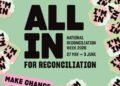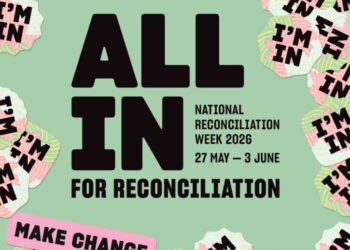


















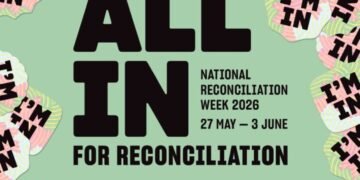








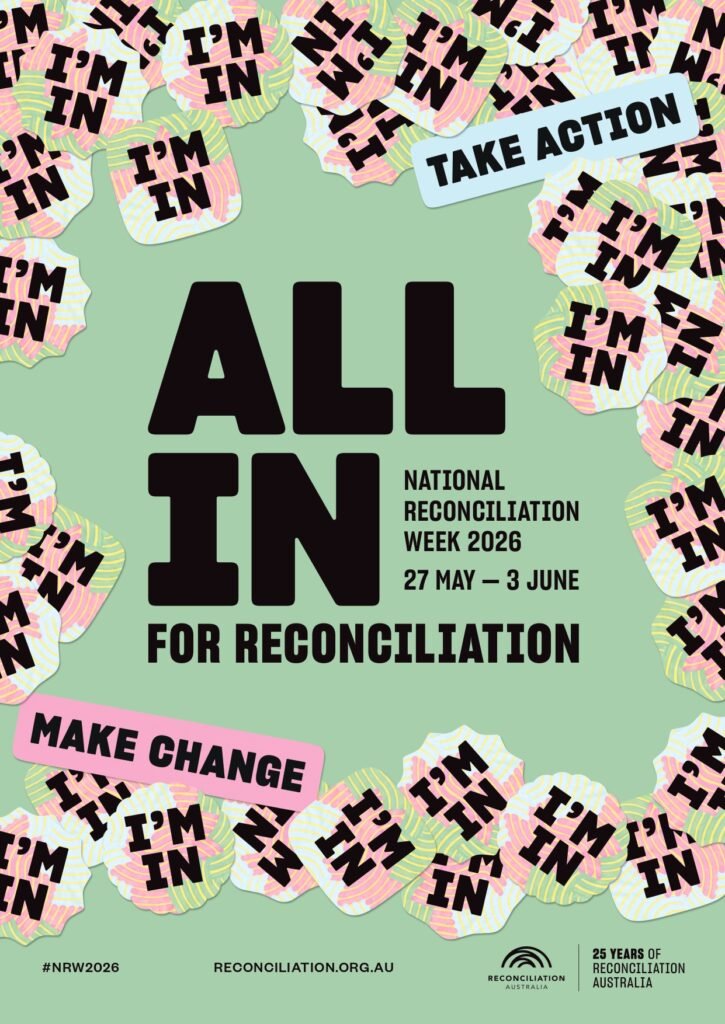
National Reconciliation Week (27 May – 3 June) calls on all Australians—regardless of background—to make reconciliation an active, everyday responsibility. For multicultural communities, it is both a bridge and a reckoning.

From 27 May to 3 June each year, Australia observes National Reconciliation Week (NRW)—a period dedicated to building respectful relationships between Aboriginal and Torres Strait Islander peoples and the wider Australian community.
Led by Reconciliation Australia, the week is anchored between two defining milestones in the nation’s history: National Sorry Day on 27 May and Mabo Day on 3 June.
More than a symbolic observance, NRW is a national call to reflect, learn, and act.
In 2026, that call lands at a complex moment. Australia continues to navigate debates around identity, inclusion, and social cohesion—making reconciliation not just a First Nations issue, but a shared national responsibility that extends across multicultural communities.
Why These Dates Matter
27 May — National Sorry Day
Marks the anniversary of the 1997 Bringing Them Home report, which documented the forced removal of Aboriginal and Torres Strait Islander children from their families—now known as the Stolen Generations.
3 June — Mabo Day
Commemorates the Mabo Decision, which overturned the doctrine of terra nullius and recognised native title rights for the first time in Australian law.
Together, these dates frame NRW as both:
- A period of truth-telling, and
- A recognition of rights and justice
Where Reconciliation Stands Today
Australia has made progress—but the data shows the journey is far from complete.
According to the Australian Bureau of Statistics and Closing the Gap reporting:
- First Nations Australians remain significantly overrepresented in the prison system, making up roughly one-third of the prison population despite being a small percentage of the total population
- A life expectancy gap of around 8 years persists between First Nations and non-Indigenous Australians
- First Nations children are significantly more likely to be in out-of-home care
At the same time:
- Some Closing the Gap targets, particularly in early childhood education and employment, are showing improvement
- Thousands of organisations now participate in Reconciliation Action Plans (RAPs), embedding reconciliation into workplaces across the country
The picture is one of incremental progress alongside deep structural inequality.
The Multicultural Lens: Why This Week Matters Beyond One Community
Australia is one of the most culturally diverse nations in the world, with nearly half the population either born overseas or having at least one parent born overseas.
For multicultural communities, reconciliation can sometimes feel distant—something connected primarily to First Nations history.
But that distance is misleading.
Shared Histories of Displacement and Identity
Many migrant communities carry their own histories of:
- Colonisation
- Partition
- War and forced migration
While these experiences are not the same as those of First Nations peoples, they can create points of empathy and understanding—particularly around loss of land, language, and cultural identity.
A Shared Future in the Same Country
Reconciliation is not only about the past—it is about how people live together now.
In suburbs across Sydney, Melbourne, and Brisbane:
- Multicultural communities live and work on Aboriginal land every day
- Small businesses, workplaces, and schools are increasingly culturally diverse spaces
- Interactions between First Nations peoples and migrant communities are growing and evolving
This makes reconciliation a shared civic responsibility, not a separate conversation.
Challenges and Misunderstandings
At the same time, there are real challenges:
- Limited awareness of First Nations histories among newly arrived migrants
- Language barriers that make engagement harder
- Occasional tensions around resources, representation, and identity
Without active engagement, these gaps can widen.
NRW provides an opportunity to close them through dialogue, education, and shared experience.
What Happens During National Reconciliation Week
Across Australia, NRW typically includes:
- Community events and cultural performances
- Reconciliation walks and public gatherings
- Workplace learning sessions and discussions
- School-based education programs
- Local council initiatives and community dialogues
Many events are led by First Nations organisations, with growing participation from multicultural groups, local governments, and businesses.
The Role of Workplaces and Institutions
Reconciliation is increasingly embedded in Australian workplaces through Reconciliation Action Plans (RAPs), supported by Reconciliation Australia.
These plans often include:
- Cultural awareness training
- Employment pathways for First Nations peoples
- Procurement from Indigenous-owned businesses
- Community partnerships
Thousands of organisations across sectors—from retail to government—are now part of this framework.
What “Being Part of It” Actually Looks Like
Reconciliation is often discussed in broad terms. In practice, it comes down to simple, consistent actions.
For individuals
- Attend a local NRW event
- Learn about the Traditional Owners of your area
- Engage with First Nations literature, art, and history
- Support Indigenous-owned businesses
For multicultural communities
- Include First Nations voices in cultural events and festivals
- Create opportunities for cross-cultural exchange
- Encourage intergenerational conversations about history and belonging
For organisations
- Move beyond symbolic gestures to measurable commitments
- Invest in long-term partnerships with First Nations communities
- Ensure diversity and inclusion efforts include First Nations perspectives
The Bigger Question
National Reconciliation Week is often framed as a time of reflection.
But it is equally a test.
A test of whether reconciliation remains:
- A symbolic idea, revisited once a year
or - A lived commitment, embedded in how Australians think, work, and relate to one another every day
For multicultural Australia, the question is particularly important.
Because belonging in this country is not just about opportunity—it is also about understanding the history of the land on which that opportunity exists.
Reconciliation is not a finished project.
It is ongoing, sometimes uncomfortable, and often uneven.
But it is also essential.
And for a country as diverse as Australia, its success depends not just on policy or leadership—but on whether people, across all communities, choose to be part of it.
Not occasionally.
But consistently.
Sources & References
- Reconciliation Australia — National Reconciliation Week
- Australian Bureau of Statistics — Aboriginal and Torres Strait Islander statistics
- Australian Government — Closing the Gap Annual Reports
- Reconciliation Australia — State of the Nation reporting