





























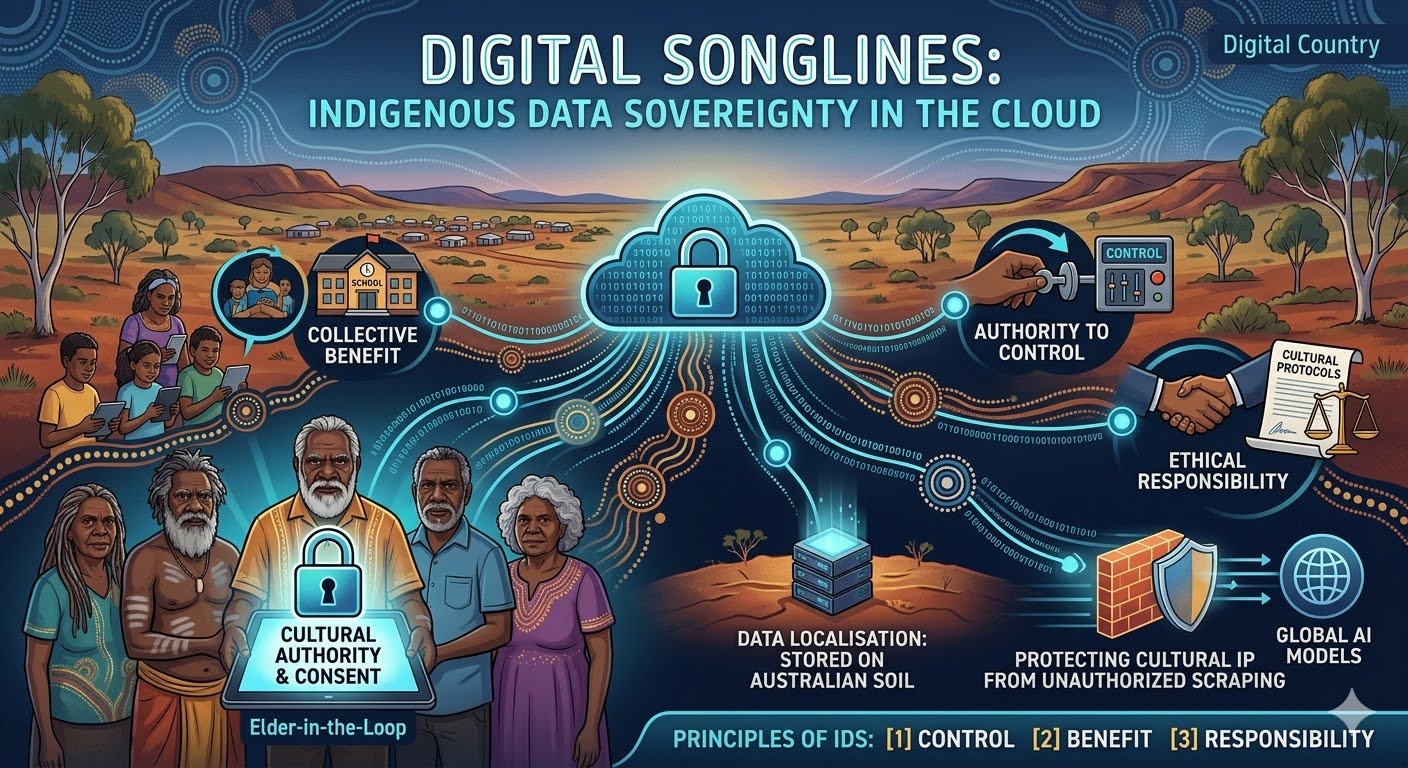
The Story: Guarding the Digital Country
For tens of thousands of years, the knowledge of Australia’s First Nations people has been managed through strict cultural protocols. Stories, traditional medicines, and sacred maps were never “free for all”—they were held by specific families and protected by Elders.

As we move through 2026, this ancient practice of “knowledge management” is entering a new frontier. As Australia expands its national digital infrastructure, a vital movement is ensuring that Aboriginal and Torres Strait Islander people maintain authority over the “Digital Country” they inhabit.
This movement is known as Indigenous Data Sovereignty (IDS). It is the principle that Indigenous people should have the right to own, control, and access data that relates to them, their lands, and their heritage. In an era where Artificial Intelligence (AI) models are hungry for information, IDS is the “shield” that prevents cultural knowledge from being extracted and used without consent.
The Innovation: Indigenous Data Sovereignty (IDS) Platforms
The most significant shift in 2026 is the move from mere consultation to structural ownership. We are seeing the rise of Australian-designed IDS platforms—digital storage systems built to handle Indigenous data in a way that aligns with cultural law.
Key Features of 2026 IDS Platforms:
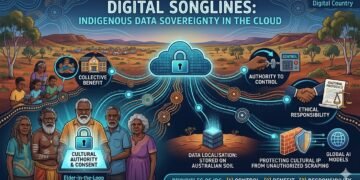
- “Elder-in-the-Loop” Permissions: Unlike standard clouds where one person has total control, these platforms use a “community-consent” model. For example, if a researcher wants to access a specific language recording, the system requires a digital “sign-off” from a verified community Elder.
- Consent-Based Access Controls: These are often described as “Digital Songlines”—metadata layers that restrict who can see certain information. Instead of just a password, access is granted based on the user’s relationship to the community or the purpose of their work.
- Data Localisation Requirements: Under the 2026 Governance of Indigenous Data (GID) Implementation Plan, sensitive First Nations data is stored on servers physically located on Australian soil. This ensures that Australian legal protections—rather than the rules of a foreign tech giant—apply to the information.
The Connection: Digital Inclusion and Authority
For our multicultural and regional readers, “digital inclusion” in 2026 has reached a turning point. The First Nations Digital Inclusion Plan (2023–2026) has hit its target year, moving the focus from just “getting online” to having digital authority.
What this means for communities:
- Language Revitalisation: Communities are using their own data platforms to save languages at risk. Because they own the data, they can ensure that AI-powered language tools benefit their own children first, rather than being commercialised by outside companies.
- Protecting Land Rights: By managing their own mapping and environmental data, Traditional Owners can better advocate for their country. Having a secure “Digital Map” is a powerful tool in negotiations for land management and carbon credits.
- Community Trust: Research by bodies like the Lowitja Institute and Winyama shows that when a community knows their data is safe and culturally respected, they are much more likely to engage with digital health and education services.
The Canvas Value: First Nations Respect
At The Australian Canvas, our core value is First Nations Respect. This means recognizing that technological progress must honor the oldest continuous living culture on earth.
In 2026, we see a shift in how technology is built:
- Custodianship Frameworks: Indigenous tech-leaders are now the architects of these systems. They are building technology that reflects a worldview of custodianship—where information is a gift to be protected for future generations, not just a product to be sold.
- The CARE Principles: These platforms often follow the CARE Principles for Indigenous Data Governance (Collective Benefit, Authority to Control, Responsibility, and Ethics), which provide an international standard for ethical data use.
A Note of Caution: Care vs. Access
While IDS platforms are a massive step forward, 2026 brings new debates. Some critics worry that strict “cultural firewalls” might make it harder for scientists to access data that could lead to medical breakthroughs.
The challenge for the future is finding a balance: Protecting what is sacred while sharing what is beneficial, always ensuring that Indigenous communities remain in the driver’s seat.
The 2026 Digital Sovereignty Checklist
How can we tell if a technology respects Indigenous Data Sovereignty? Look for these three principles:
- Authority to Control: Do First Nations people have the final say on who sees the data?
- Collective Benefit: Does the use of the data actually help the community it came from?
- Ethical Responsibility: Is the data stored in a way that follows local cultural protocols?
A Future Owned by All
When we protect Indigenous Data Sovereignty, we are protecting the integrity of the whole Australian story. By ensuring First Nations people are the masters of their own digital future, we create a technology landscape that is more ethical and more respectful for everyone.
The “Digital Songlines” of 2026 are not just about preserving the past; they are the tracks we are laying for a future where every Australian can belong and thrive in a digital world.