





























The “International” aisle in your local supermarket is having an identity crisis—mostly because it’s starting to take over the rest of the store. What were once considered “specialty” categories—Halal-certified meats, plant-based staples, and authentic cultural ingredients—are now the primary drivers of growth in the Australian retail landscape.

In 2026, multiculturalism isn’t just a social value; it’s a logistical powerhouse. As Australia’s Halal market alone surges toward a projected $27.5 billion by 2035, the big players like Woolworths and Coles are no longer just “stocking” these items—they are rebuilding their supply chains to ensure they can keep up with a more sophisticated, diverse, and ethically-minded consumer.
The $15 Billion Certification Surge
For years, Halal and vegetarian options were often relegated to independent grocers. Today, they are mainstream anchors. Data from Expert Market Research valued the Australian Halal market at over $15.2 billion in 2025, with a steady growth rate of 6.1% as we head into the second half of the decade.
This shift is being driven by more than just population growth. There is a rising “halo effect” where non-Muslim consumers are opting for Halal-certified products, associating the strict certification process with higher standards of hygiene and traceability. Retailers have noticed: 74.9% of Halal food sales now occur in major supermarkets and hypermarkets rather than specialty stores.
Regional Producers: The New Export Kings
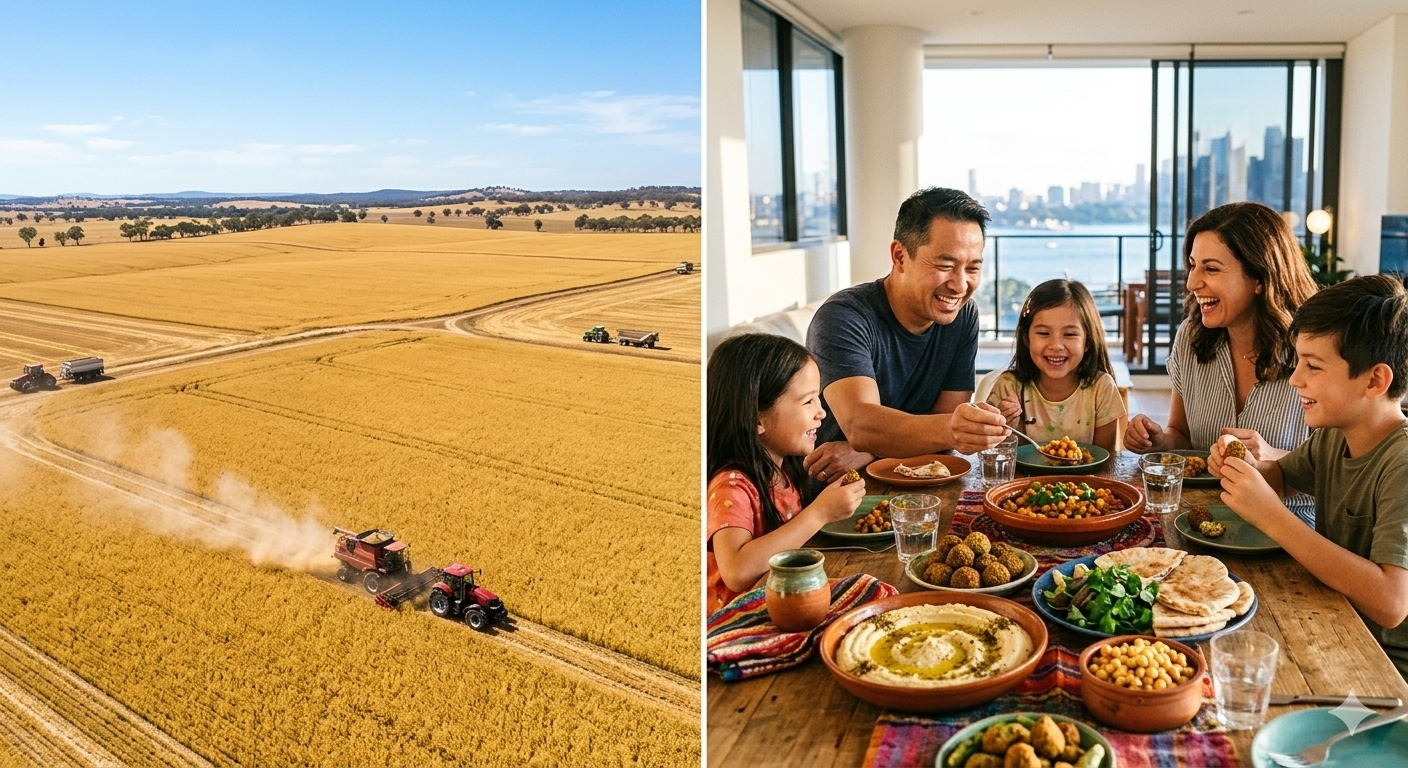
The real winners in this shift aren’t just the supermarkets; they are the farmers in regional Australia. Our regional heartland is quietly becoming the “delicatessen of Asia.”
According to recent Austrade updates, Australian producers are cashing in on massive cultural events globally. In early 2026, Australia sent record-breaking shipments of chickpeas to Bangladesh for the Ramadan season and landed premium “marbled lamb” in Malaysia’s fine dining scene.
Closer to home, regional hubs are pivoting to meet domestic demand:
- The Pulse Boom: Grains and pulses (essential for vegetarian and many cultural diets) have seen a massive compositional shift, now accounting for a much larger share of Australian agricultural output than traditional wool or milk.
- Value-Added Meat: Small-to-medium livestock producers are increasingly seeking Halal certification to access both the lucrative domestic “premium” market and high-growth export markets in Southeast Asia and the Middle East.
Logistics: The Invisible Revolution
Mainstreaming these foods isn’t as simple as changing a label. It requires a “segregated supply chain”—ensuring that Halal products, for instance, never come into contact with non-compliant items from the farm gate to the dinner plate.
In 2026, blockchain and traceability tech have become the “silent partners” of the multicultural food boom. To maintain trust, producers are using digital passports for every pallet of food. This ensures that a “vegetarian” meal kit or a “Halal” steak is exactly what it says on the box, backed by real-time data that satisfies both the ACCC’s greenwashing rules and religious certification bodies.
The “Inclusive” Plate: Beyond the Trend
As we move through 2026, the distinction between “Australian food” and “Multicultural food” is evaporating. Whether it’s a Grill’d opening a fully Halal-certified restaurant in western Sydney or regional avocado exporters using “cultural fluency” to dominate Asian markets, the evidence is clear: diversity is the new default.
For young Aussies, this means a more vibrant, ethical, and high-quality food system. We are moving away from “consumption” and toward “connection”—eating food that reflects the complex, beautiful, and diverse canvas of the country we call home.
Sources: