





























The 2026 Reality: Churn over Permanence
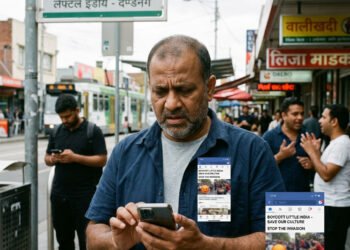
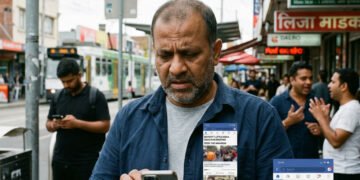
For decades, migration to Australia was seen as a one-way ticket. But 2026 data from the Australian Bureau of Statistics (ABS) reveals a more fluid reality. While net overseas migration remains high (forecast at 306,000 for the 2024–25 financial year), the “churn”—the number of people departing—is rising. In late 2025 alone, departures increased by 8.4% compared to the previous year.

This isn’t just international students finishing degrees; it is a growing “Return Trend” among established multicultural families. For many, the “Fair Go” is being weighed against a “Better Flow”—the ability to live where their dollar goes further and their elderly parents can be cared for within the family home.
The Affordability Equation: Australia vs. “Home”
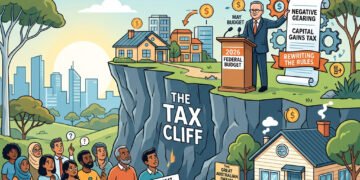
In 2026, the average monthly cost of living for an Australian family has climbed to between $6,500 and $8,000, with housing and childcare remaining the “biggest bites.” By comparison, many diaspora origin countries—while facing their own inflation—offer a vastly different quality of life for those with Australian savings or remote “global” incomes.
| Cost Category | Sydney/Melbourne (Avg) | Manila/HCMC/Mumbai (Avg) |
| Median Rent (3BR) | $3,200 – $4,500 AUD | $800 – $1,500 AUD |
| Full-time Childcare | $120 – $180 /day (pre-subsidy) | $300 – $700 /month (Private) |
| Elder Care | $75k – $120k /year (Residential) | Family-based / $400 – $800 /month (Help) |
Note: These figures are 2026 estimates based on Numbeo and local community surveys; they do not account for local tax or healthcare nuances.
The Human Story: The Singh Family’s “Split Living”
For Preeti and Arjun Singh, the decision to leave Parramatta after 12 years wasn’t about a lack of love for Australia—it was about a lack of time. With two kids under ten and aging parents in Chandigarh, the “Sandwich Generation” pressure became a breaking point.
“We were spending $4,000 a month on a mortgage and another $2,000 on daycare, while my mother was ill 12,000 kilometres away,” Preeti explains. “In 2026, being ‘Australian’ means being able to choose the best life for your whole family. We decided on a ‘Split Living’ model: six months in Punjab to care for the grandparents, and six months in Brisbane where the kids attend school. It’s exhausting, but it’s the only way we feel ‘whole’.”
For their children, however, the “return” is a foreign concept. They identify as Australian first; to them, India is a holiday destination, not a home. This Intergenerational Friction is the silent cost of circular migration.
FAQ: Navigating the In-Between
Why are more families doing “split living” in 2026? It is often a tactical response to the “Care Crisis.” With the New Aged Care Act (introduced Nov 2025) still bedding in, many find that cultural and linguistic safety for elders is easier to achieve back home, while remote work allows parents to maintain Australian salaries.
What are the biggest hidden costs of moving back?
- Education: International school fees in Asia often rival Australian private schools ($20k–$40k AUD/year).
- Healthcare: Without Medicare, private insurance for a family of four can exceed $500/month in origin countries.
- The “Returnee Tax”: The social expectation to support extended family once you “return from the West.”
What happens to my PR or Citizenship if I live overseas?
- Citizens: Your status is secure, but you must keep your Australian passport current and notify the AEC to maintain voting rights.
- Permanent Residents: You must monitor your Resident Return Visa (Subclass 155/157). If you spend less than 2 out of 5 years in Australia, you must prove “substantial ties” (business, cultural, or family) to keep your re-entry rights.
How can we plan ethically for elder care across borders? The 2026 advice from the Ethnic Communities Council is to utilize the “Support at Home” program if parents are in Australia. If moving them overseas, ensure they have access to local specialized geriatric care and that their Australian pension portability is verified through Centrelink International Services.
What is the mental health impact of “in-between” lives? Psychologists call it “Chronic Liminality.” Children may struggle with a sense of “rootlessness,” while parents often face “returnee guilt”—the feeling that they have failed at the Australian dream by leaving, or failed their parents by staying.
Where can I get practical guidance (without social media rumours)?
- Smartraveller: For official “Living Overseas” checklists.
- Department of Home Affairs: For VEVO checks on your visa travel facility.
- Financial Planners (Cross-Border Specialists): Essential for managing Superannuation and CGT on property when moving.
The New Definition of Home
In 2026, “moving back” is rarely a simple reversal. It is a sophisticated, often painful, recalibration of what a family values most. Whether you stay, go, or oscillate between the two, the “New Australian” identity is proving that home isn’t a single coordinate on a map—it’s wherever your layers can finally rest.