





























The Noise and the Silence
By the autumn of 2026, the digital landscape has reached a point of total saturation. We are living through what sociologists call the “Polycrisis”—a period where the constant hum of global news, the cost-of-living squeeze, and the rapid rise of artificial intelligence have created a kind of collective sensory overload. For many Australians, the response has been a quiet withdrawal. We are seeing a mass migration away from the performative “outrage culture” of the early 2020s toward a deeper, more private search for meaning.

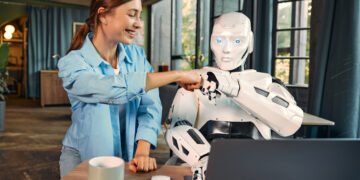
This shift is not about “unplugging” in a nostalgic sense; it is about the “Human Premium.” As AI becomes capable of generating perfect images, perfect music, and even perfect political speeches, the value of the “imperfect” has skyrocketed. We are beginning to crave the crack in a singer’s voice, the smudge of charcoal on a sketch, and the stutter of a speaker who is actually feeling what they say. In 2026, authenticity is no longer a marketing buzzword; it is a scarce and precious resource.
The Virtue of Slow Thinking
The pace of 2026 demands instant reactions, but the most resilient Australians are those practicing “Slow Thinking.” This is a deliberate rejection of the 24-hour cycle in favor of deep focus. We are seeing a resurgence in long-form reading, community debating circles, and “analog hobbies” like woodworking, gardening, and pottery. These aren’t just pastimes; they are psychological anchors.
Psychological data from 2025 suggests that tactile, hand-eye coordination tasks significantly reduce the “digital anxiety” caused by algorithmic scrolling. When we work with wood or soil, we are forced to move at the speed of nature, not the speed of fiber-optics. This reconnection to the physical world is a form of rebellion against a system that wants to turn our attention into a tradable commodity. It is a reclamation of the “inner life”—that quiet space where our most honest thoughts live.
The Loneliness Paradox
Despite being more “connected” than any generation in history, the “Loneliness Paradox” remains a critical health issue in Australia. In 2026, the government’s Social Connection Strategy has highlighted that one in four Australians still report feeling lonely most of the week. The irony of the digital age is that while it connects us to everyone, it often fails to connect us to anyone.
The solution emerging in 2026 is “Radical Neighborhoodism.” People are turning away from global digital tribes and looking at the person living next door. We are seeing the return of the “Street Library,” the “Tool Pool,” and the “Community Kitchen.” These are the spaces where the “Double-Belonging” of our multicultural neighborhoods turns into a shared reality. By acknowledging our vulnerability and our need for one another, we break the spell of digital isolation.
Cultivating the Inner Compass
In a world that feels increasingly volatile, the 2026 “Voice” is one of quiet, proactive optimism. This isn’t a blind “everything will be fine” attitude, but a “virtue-based” resilience. It is the understanding that while we cannot control the global economy or the pace of technological change, we can control our character.
We are seeing a return to “Ethical Living” as a lifestyle choice. This goes beyond recycling; it is about how we treat people in the supermarket queue, how we talk to our children about the future, and how we choose to spend our most valuable asset: our attention. In 2026, the ultimate flex isn’t what you own, but how much “peace of mind” you have maintained despite the chaos.
The Conclusion: The Unfinished Canvas
Being human in 2026 is an active choice. It requires us to be brave enough to be bored, soft enough to be hurt, and slow enough to be present. As we look at the national landscape, we see a country that is tired of the noise but hungry for the truth.
The “Human Premium” reminds us that we are not data points for an algorithm to solve. We are a collection of stories, a series of mistakes, and a deep well of potential. By choosing to stay human—to stay vulnerable, curious, and connected—we aren’t just surviving the digital age; we are defining it. We are the artists of our own lives, and the canvas is far from finished.
Verified Sources and Links
- McCrindle Research:The Rise of the Human Premium and 2026 Social Trends.
- mccrindle.com.au – Social Trends (Referencing 2025/2026 projections)
- Australian Institute of Health and Welfare (AIHW):Social Connection and Loneliness in Australia 2026 Report.
- The Black Dog Institute:Digital Wellbeing and the “Slow Thinking” Movement in 2026.
- Swinburne University of Technology:The Loneliness Paradox: 2026 Longitudinal Study.
- Australian Human Rights Commission:Virtue Ethics and Human Rights in the Age of AI (2026 Position Paper).