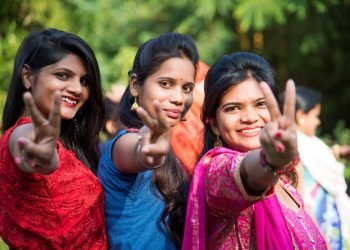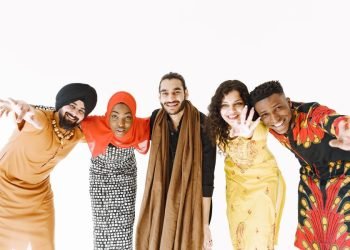





























In mid-2026, the Australian Bureau of Statistics (ABS) is set to release a “family photograph” of the nation unlike any before. Preliminary data and the 2025 Mapping Social Cohesion report suggest that for the first time, we have crossed a definitive threshold: Australia is now a majority-migrant nation in its immediate heritage. Over 51.5% of residents were either born overseas or have at least one parent who was.

But the 2026 story isn’t just about numbers; it’s about a shift in how we count. Following years of advocacy from groups like the Multicultural Centre for Women’s Health, the 2026 Census has moved beyond simple “ancestry” to allow for up to four distinct cultural identifiers. This change acknowledges that “New Australian” isn’t a single label anymore—it is a layered experience. A young person in 2026 may identify as Punjabi, Singaporean, and Australian simultaneously, seeing no contradiction between these threads.
The Reconciliation Bridge: Multiculturalism and First Nations
One of the most significant shifts in 2026 is the deepening connection between multicultural communities and First Nations reconciliation. The theme for National Reconciliation Week 2026, “All In,” has seen an unprecedented surge in participation from diaspora groups.
According to the 2024 Australian Reconciliation Barometer, 90% of multicultural Australians believe the relationship with First Nations people is vital—a rate higher than that of Anglo-Australians (83%). This “Solidarity of the Displaced” suggests that newer Australians are often the most eager to understand the “Truth-Telling” aspects of Australian history. They don’t just want to “fit into” a colonial story; they want to be part of a modern nation that respects the oldest continuing culture on Earth as its foundation.
The “Fair Go” vs. The Cost-of-Living Squeeze
While support for multiculturalism remains high (with 85% of Australians agreeing it is “good for the country”), the 2026 identity is being tested by economic pressure. The Scanlon Foundation’s 2025/26 research indicates that for the first time, concerns about immigration levels are being driven primarily by housing and cost-of-living rather than cultural anxiety.
The “New Australian” of 2026 is often an essential worker—a nurse in a regional hospital, a site supervisor on a social housing project, or a teacher in a growing suburb. As we navigate the “Fair Go” in an era of high rents, the public interest defense of migration has shifted. We no longer talk about migration as a “choice” but as a “structural necessity.” Without the 2026 skilled intake, the very infrastructure needed to solve the housing crisis would remain unbuilt.
The End of the “Mainstream” Monolith
For decades, Australian media and politics spoke to a “mainstream” that was assumed to be monolingual and Anglo-Celtic. In 2026, that monolith has dissolved. From the 2026 AACTA Awards celebrating diverse creators to the Multicultural Framework Review, the government is now mandated to apply an “Inclusion Lens” to all policy.
The “New Mainstream” is multilingual, digitally connected to global diasporas, and fiercely local. This is visible in our suburban centers—from Parramatta to Footscray—where “Australian-ness” is performed through a fusion of traditions. Whether it’s celebrating Lunar New Year, Diwali, or Harmony Week, these are no longer “ethnic festivals”; they are the heartbeat of the national calendar.
Actionable Identity: What You Can Do
Identity in 2026 is an active participation, not a passive status. To foster this “Layered Belonging,” sociologists from the ANU Centre for Social Research suggest:
- Truth-Telling at Home: Learn the First Nations history of the land your family settled on.
- Linguistic Pride: Encourage “Mother Tongue” maintenance in schools; bilingualism is now recognized as a premier economic and cognitive asset in the 2026 workforce.
- Community Connection: Participate in “Social Cohesion” initiatives, such as local sports clubs or neighborhood councils, which remain the strongest predictors of national happiness.
The Canvas is Complete
The “Australian” of 2026 is not a finished product; we are a work in progress. By moving away from the “ethnic box” and toward a layered, inclusive identity, we are finally creating a nation that matches its own rhetoric of the “most successful multicultural country in the world.”
The canvas is no longer just one color. It is a vibrant, complex, and sometimes messy mosaic—and that is exactly what makes it home.
Sources and Links
- ABS (Australian Bureau of Statistics): 2026 Census Topics and Data Release Plan. abs.gov.au – 2026 Census
- Scanlon Foundation Research Institute: Mapping Social Cohesion 2025/2026 Report. scanloninstitute.org.au – Social Cohesion
- Reconciliation Australia: National Reconciliation Week 2026 – Multilingual Communities. reconciliation.org.au – NRW 2026
- Department of Home Affairs: Multicultural Framework Review and Government Response. homeaffairs.gov.au – Framework Review
- Parliament of Australia: Diversity, Migration and Social Cohesion Issues and Insights (May 2025). aph.gov.au – Library Research