

































Key Points
- Communal cooking traditions remain central to many migrant and cultural communities in Australia
- Practices such as Italian tomato bottling and Lebanese Ramadan cooking are rooted in family, labour, and shared identity
- These traditions are often sustained by older generations and passed down over time
- Food preparation at scale continues to play a role in maintaining cultural continuity
A Shared Ritual Around Food
Across Australia, in suburban backyards, garages, and community kitchens, a quiet ritual continues each year. Known informally as “Sunday sauce” in many Italian-Australian households, it refers to more than just a meal. It is part of a broader tradition of cooking in large quantities, often involving extended family and spanning several generations.

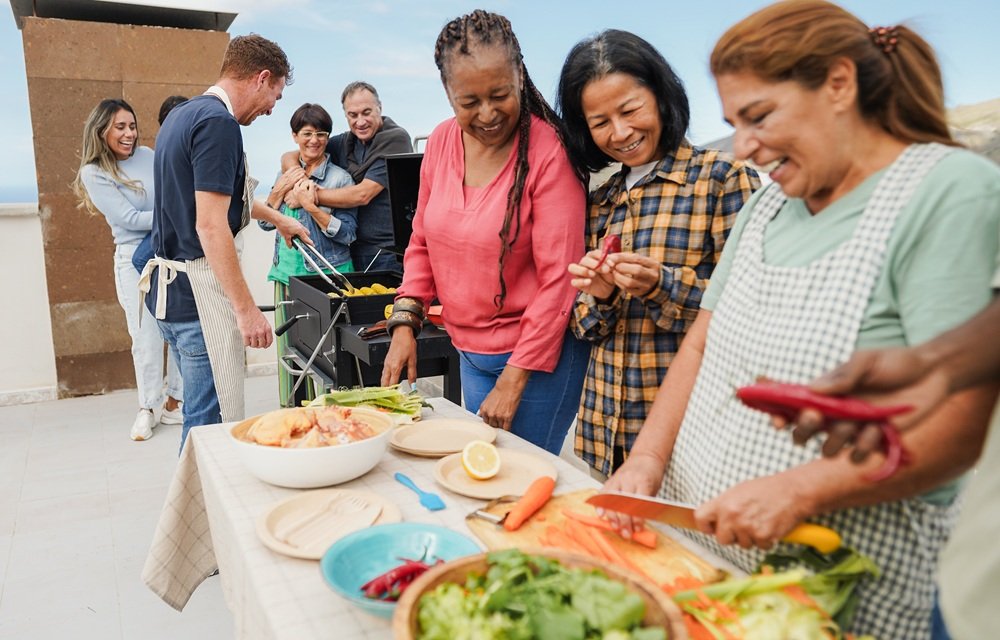
Similar practices exist across many communities. In Lebanese-Australian families, large-scale cooking becomes especially visible during Ramadan, when meals are prepared daily to break the fast at sunset, known as Iftar. While the ingredients and dishes differ, the underlying idea is the same: food is prepared collectively, shared widely, and tied closely to identity and belonging.
These traditions are not new. They reflect ways of living that migrants brought with them and adapted to Australian conditions over decades.
From Backyard Tomatoes to Pantry Staples
For many Italian-Australian families, the tomato harvest season—usually in late summer—marks the time for “the big cook.” Boxes of ripe tomatoes are sourced, often from local growers or markets, and processed over long days.
The process is labour-intensive. Tomatoes are washed, cut, cooked, and passed through manual or electric presses to remove skins and seeds. The resulting passata is then bottled, sealed, and stored for use throughout the year.
While technology has made some steps easier, the structure of the day often remains unchanged. Family members gather early, tasks are divided, and work continues for hours. Older relatives usually oversee the process, ensuring consistency and passing on practical knowledge.
For many, this is not only about preserving food but also about maintaining a connection to earlier generations who followed similar routines in Italy before migrating to Australia.
Cooking Through Ramadan
In Lebanese-Australian communities, large-scale cooking takes on a different rhythm during the Islamic holy month of Ramadan. Each evening, families prepare Iftar, the meal that breaks the daily fast after sunset.
While some households cook daily, others prepare food in larger batches to share with extended family, neighbours, or community members. Dishes such as soups, stews, rice-based meals, and sweets are made in quantities designed to feed many people.
One commonly prepared dish is mujadara, a combination of lentils, rice, and caramelised onions. It is valued for its affordability, nutritional balance, and ability to be cooked in large volumes.
Mosques and community centres also play a role, often hosting shared meals where volunteers contribute food. In cities like Sydney and Melbourne, these gatherings bring together people from different backgrounds, reflecting the diversity within Lebanese and broader Muslim communities in Australia.
The Role of Family Elders
At the centre of these traditions are family elders—the matriarchs and patriarchs who carry knowledge built over decades.
In many households, recipes are not written down. Instead, they are taught through observation and repetition. Measurements are often approximate, based on experience rather than exact quantities. Techniques—such as judging when a sauce is ready or how finely to chop ingredients—are passed on informally.
These individuals also act as organisers. They coordinate who does what, ensure that cultural practices are followed correctly, and maintain a sense of continuity. Their role extends beyond cooking; they help reinforce family structure and shared values.
As younger generations grow up in Australia, participation in these cooking days can vary. Work schedules, lifestyle changes, and access to convenience foods have all influenced how often such traditions are maintained. However, many families continue to prioritise these gatherings, even if less frequently than in the past.
Labour, Time, and Adaptation
Large-scale cooking requires time, coordination, and physical effort. It is not always practical in modern urban life. As a result, some traditions have adapted.
In Italian-Australian households, fewer families now grow their own tomatoes, relying instead on purchased produce. Equipment has also changed, with electric machines replacing manual presses. Some families reduce the scale of production, making smaller batches.
Similarly, in Lebanese-Australian communities, prepared foods and catering services are sometimes used alongside home cooking during Ramadan, particularly for larger gatherings.
Despite these changes, the core idea remains intact: food preparation as a shared activity rather than an individual task.
A “Community-Scale” Dish: Slow-Cooked Ragù
One of the most recognisable dishes linked to the idea of “Sunday sauce” is a slow-cooked ragù. While recipes vary widely depending on region and family tradition, the basic method remains consistent.
Ingredients (serves a large group)
- Olive oil
- Onions, finely chopped
- Garlic
- Minced or diced beef and/or pork
- Canned or fresh crushed tomatoes (or bottled passata)
- Tomato paste
- Salt
- Optional: carrots, celery, herbs such as basil or bay leaf
Method
- Heat olive oil in a large pot and cook onions until soft.
- Add garlic and cook briefly.
- Add meat and cook until browned.
- Stir in tomato paste and cook for a few minutes.
- Add tomatoes or passata and bring to a gentle simmer.
- Reduce heat and cook slowly for several hours, stirring occasionally.
- Adjust seasoning as needed.
The key to ragù is time. Slow cooking allows flavours to develop gradually, producing a rich, consistent sauce that can be used across multiple meals.
A “Community-Scale” Dish: Mujadara
Mujadara is widely prepared across the Middle East and is common in Lebanese households. It is often cooked in large quantities due to its simplicity and versatility.
Ingredients (serves a large group)
- Brown or green lentils
- Rice
- Onions (a large quantity)
- Olive oil
- Salt
- Optional: cumin or other spices
Method
- Cook lentils in water until partially tender.
- Add rice and continue cooking until both are soft.
- In a separate pan, slice onions and cook slowly in oil until deeply caramelised.
- Combine lentils and rice with some of the onions and oil.
- Top with remaining onions before serving.
The dish can be served warm or at room temperature, making it suitable for large gatherings.
Continuity Through Change
The “Sunday sauce” tradition, and similar practices across cultures, continue to evolve. While fewer families may engage in large-scale cooking as regularly as in the past, the meaning behind these activities remains relevant.
They provide a way to maintain connections—to family, to heritage, and to shared experiences. In a multicultural country like Australia, these traditions contribute to a broader understanding of how food functions beyond nutrition.
They show how cooking can be an act of memory, organisation, and care.
Looking Ahead
As Australia’s population continues to diversify, communal cooking traditions are likely to persist in different forms. Some may become less frequent, while others may adapt to new settings, including community kitchens or organised events.
What remains consistent is the role of food as a link between generations. Whether through a pot of slow-cooked sauce or a shared Ramadan meal, these practices continue to shape how communities gather, remember, and sustain themselves.