






















The Fandom Shift
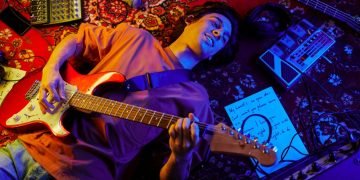
For years, the death of traditional theatre was predicted as streaming services dominated the cultural diet. However, 2026 has proven the opposite. A profound “IRL” (In Real Life) renaissance is underway. According to recent consumer data, 92% of Gen Z Australians now value real-world connections over digital alternatives, with a specific focus on discovering music and performance in physical spaces rather than via algorithms.

This is the “Stage” as a community anchor. At The Australian Canvas, our journalism gyan is rooted in the belief that the stage is where we rehearse being a community. In 2026, we are seeing “passive” audiences transform into “active” fandoms. Theatre is no longer a polite night out; it is an urgent, live-only event that demands presence.
Breaking the Price Barrier: The “Pay-What-You-Can” Revolution
The greatest hurdle to cultural participation has always been the “Gold Class” price tag. In response to the 2025–2026 cost-of-living pressures, major institutions like the Australian Theatre for Young People (ATYP) and NIDA have spearheaded a “Radical Accessibility” movement.
The 2026 Festival of Emerging Artists has moved toward a free-to-the-public model for its flagship showcases, while several mid-tier theatre companies have introduced “Pay-What-You-Can” nights. This isn’t charity; it’s a strategic investment in the future of the audience. By removing the financial barrier, the stage is inviting in the “Second-Generation Bridge” we discussed in our multicultural series—ensuring that the stories told on stage reflect the diverse faces in the street.
Immersive and Site-Specific: The Stage Without Walls
In 2026, the most exciting “Stage” isn’t a stage at all. From the Enlighten Festival in Canberra to Immerse in Melbourne’s Knox, art is spilling into the public square. Site-specific performances—where the audience follows actors through laneways or interacts with digital projections on iconic buildings—have become the hallmark of the 2026 season.
This shift to “Stage Without Walls” aligns with our core value of Community Storytelling. When a convict mother’s story is told on the brutal shores of a colonial-era harbor, or a queer reimagining of The Red Shoes takes place in a Darlinghurst nightclub, the history of the place becomes an actor in the play. This is Authentic Journalism: acknowledging that the location of the story is as important as the script.
The AI Transparency Provision
We must address the growing role of AI in the arts. Under the Commercial Radio Code of Practice 2026, Australian broadcasters are now required to declare when synthetic voices or AI-generated music are used. This transparency is now being adopted voluntarily by the live performance sector.
Audiences in 2026 are demanding “Human-First” creative credits. While AI is being used for breathtaking lighting designs and adaptive soundscapes, the “Stage” remains the last bastion of unedited human vulnerability. At The Australian Canvas, we hold a strict line on Accountability: we celebrate the use of technology to enhance the stage, but we insist on the transparency of the human hand behind the machine.
The Conclusion: A Mirror to the Nation
The Australian stage in 2026 is a “Reclamation and Regeneration” project. It is reclaiming the space for difficult conversations—addressing climate justice, First Nations sovereignty, and the loneliness of the digital age—while regenerating the sense of shared joy that only a live crowd can provide.
By reporting on the stage with Optimism and Candor, we invite our million-follower community to step off their screens and into the stalls. Whether it’s a high-tech projection at Parrtjima or a raw, low-budget drama in a black-box theatre, the stage is where the Australian canvas comes to life.
Verified Sources and Links
- ATYP (Australian Theatre for Young People): 2026 Performance Season and Artist Development Pipelines.
- NIDA (National Institute of Dramatic Art): 2026 Festival of Emerging Artists and MFA Directing projects.
- Media Federation of Australia (MFA): Whitepaper on Gen Z in the Media and Cultural Workforce (February 2026).
- ACMA (Australian Communications and Media Authority): Commercial Radio Code of Practice 2026 regarding AI and synthetic voice disclosure.
- Cairns Indigenous Art Fair (CIAF): 2026 Theme of “Reclamation & Regeneration.”