

















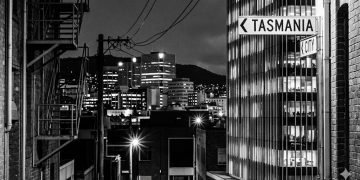











Tasmania’s latest triumph at the Australian Tourism Awards has delivered a burst of pride that’s easy to understand. In a national industry where attention often gravitates to the mainland’s big-ticket icons, Tasmania has again made a compelling case for itself—collecting 10 medals at the 2025 Australian Tourism Awards in Fremantle, according to reporting published by Pulse Tasmania and a statement from the Tasmanian Government.

But beyond the applause, the question that matters for Tasmanians—and for visitors who care about the places they travel to—is this: can awards translate into long-term, widely shared value?
Using the Canvas lens, the answer sits at the intersection of social impact, economic reality, and emotional resonance—and it’s where the public interest is clearest.
Social impact: pride, place, and pressure on local life
Awards nights are often treated like an industry scoreboard. For communities, though, tourism recognition can mean something more intimate: a sense that the place you call home is being seen—and valued—for what it is.
In its announcement, the Tasmanian Government framed the result as evidence the state is “shining” on a national stage. Pulse Tasmania’s report similarly positioned the ten medals as a standout performance, signalling a strong year for Tasmanian operators.
Yet tourism success also comes with social questions that don’t fit neatly into a trophy cabinet.
For regional towns, a strong tourism brand can help sustain local services—cafés staying open year-round, small businesses employing local teenagers, and artisans finding an audience beyond the weekend market. It can also, in peak periods, intensify pressure on roads, waste systems, car parking, and emergency services—the practical backbone of liveability.
And there’s another dimension that deserves consistent attention in Tasmanian tourism coverage: cultural safety and the rightful place of First Nations stories.
Tasmania’s First Peoples—often referred to as palawa—have enduring connections to Country and sea Country. When tourism marketing leans on “wilderness” narratives without cultural context, it risks repeating an old Australian habit: celebrating landscapes while sidelining the oldest living cultures on Earth. Good tourism, at its best, does the opposite—making space for First Nations-led experiences and strengthening respect for cultural authority.
This isn’t about turning every visitor into an expert. It’s about ensuring that as Tasmania attracts more attention, the industry’s growth supports truthful storytelling, consent, and community benefit, not just visitor volume.
Economic reality: medals are momentum, not a model
Tourism awards are a signal to consumers—and to investors—that a destination is performing. They can boost bookings, lift confidence, and help operators recruit staff. They can also support Tasmania’s broader “brand” in the global travel marketplace, an angle emphasised by international trade coverage (including Travel And Tour World, which described Tasmania’s strong result as elevating its status among global tourism audiences).
Still, awards are not an economic plan on their own.
The tourism economy is powered by people doing real work: cleaners, chefs, guides, drivers, reservation staff, marketers, maintenance teams—many of them in casual or seasonal roles. When a state celebrates industry success, the public interest question becomes: are wages, conditions and pathways keeping pace with expectations?
That matters in Tasmania, where regional labour markets can be tight and where tourism businesses often compete with other sectors for workers. It also matters for multicultural communities—including migrants and international students—who are part of hospitality and tourism workforces across Australia.
A sustainable tourism strategy, in practical terms, looks like:
- Skills and training pipelines
- Ensuring regional young people can access hospitality and tourism training without needing to leave their communities.
- Fair work and decent conditions
- Building a visitor economy that isn’t quietly reliant on underpayment or insecure rosters.
- Infrastructure that matches demand
- Transport, amenities, and planning settings that reduce friction between locals’ needs and visitor flows.
- Environmental limits taken seriously
- Protecting the very natural assets tourism depends on, especially in sensitive ecosystems.
For readers wanting a broader evidence base beyond awards reporting, Australia’s national tourism data landscape is shaped by organisations like Tourism Research Australia and the Australian Bureau of Statistics (ABS). Their ongoing datasets help track patterns in domestic and international travel, visitor spend, and broader movement trends—useful context when judging whether an awards surge reflects a durable shift or a strong season.
In other words: the medals matter, but so does the measurement that follows.
Emotional resonance: what Tasmania is “selling” — and what it wants to become
Part of Tasmania’s appeal is emotional, not transactional. People come for air that feels sharper, food that tastes closer to the source, and landscapes that make them put their phones down. They come seeking a version of Australia that feels slower and more grounded.
That’s why the awards result has struck a chord: it reinforces a story many Tasmanians tell about themselves—that quality can beat size, and that a small state can set a national benchmark for visitor experiences.
But emotional resonance cuts both ways. If locals begin to feel their home is being “consumed” rather than respected—if walking tracks become overcrowded, if short-stay accommodation hollows out communities, if local cafes can’t find staff because housing is scarce—then tourism stops feeling like a shared success.
The next chapter of Tasmania’s visitor economy, then, isn’t just about marketing. It’s about maintaining trust.
That trust is built when:
- local communities are heard in planning decisions,
- regional operators are supported—not squeezed by rising costs,
- First Nations cultural authority is respected, and
- visitors are invited into a relationship with place that’s responsible, not extractive.
This is where Tasmania’s awards moment can be genuinely constructive. Recognition provides leverage: to argue for better infrastructure, to make the case for higher-quality experiences over volume, and to centre sustainability as a competitive advantage rather than a constraint.
If Tasmania’s leaders and industry bodies use the spotlight to talk honestly about pressures—housing, workforce, conservation, cultural safety—then the awards become more than a celebratory headline. They become a turning point toward a visitor economy that feels fairer and more resilient.
Because the strongest tourism brand isn’t built only on what travellers post. It’s built on what locals can live with—year after year.
Sources & Links
- Tasmanian Government (Premier of Tasmania) — Tasmania shines at Australian Tourism Awards
- Pulse Tasmania — Tasmania wins 10 medals at 2025 Australian Tourism Awards in Fremantle
- Travel And Tour World — Tasmania dominates the Qantas Australian Tourism Awards with ten medals…
- Tourism Research Australia — tourism statistics and research (context for industry trends)
- Australian Bureau of Statistics — tourism-related data releases (context for travel patterns)
- AIATSIS — guidance on First Nations cultural protocols and respectful terminology (cultural safety context)