































Global events are currently hitting home with profound intensity. For the thousands of Australians with family ties to the Middle East—particularly within the Iranian, Palestinian, and Lebanese communities—the “Do Not Travel” alerts from DFAT are more than just policy; they are a direct threat to family safety and cultural connection.

While the “Australian Canvas” is defined by its multicultural harmony, current overseas events are testing that cohesion, pushing social resilience and diplomatic agility to the forefront of the national conversation.
The Crisis Response: ADF Deployments and Stranded Australians
As of March 8, 2026, the federal government has confirmed that the safety of Australians in the region is its “absolute priority.” The situation has moved from monitoring to active intervention.
- RAAF Evacuation Flights: Two Royal Australian Air Force (RAAF) aircraft, including a C-17A Globemaster, were deployed this week to assist citizens stranded by widespread airspace closures. Three scheduled flights arrived in Australia over the last 48 hours, bringing home families who had been trapped by sudden border closures in Iran and surrounding transit hubs.
- DFAT Red Zones: The government has issued an urgent “Do Not Travel” mandate for the majority of the Middle East, including Iran, Israel, Lebanon, and the UAE. Foreign Minister Penny Wong has warned that those who remain in high-risk areas should “shelter in place” as commercial flight options have largely evaporated.
- Consular Emergency: The 24/7 Crisis Centre is now managing thousands of registrations from Australian permanent residents and their immediate families seeking right of entry.
The Humanitarian Pressure: Calls for Intake Reform
The conflict has sparked a heated debate regarding Australia’s Humanitarian Program for 2025-26. Advocacy groups, including the Refugee Council of Australia, are calling for “agility and flexibility” in visa allocations as displacement risks in the region escalate.
The Current Landscape:
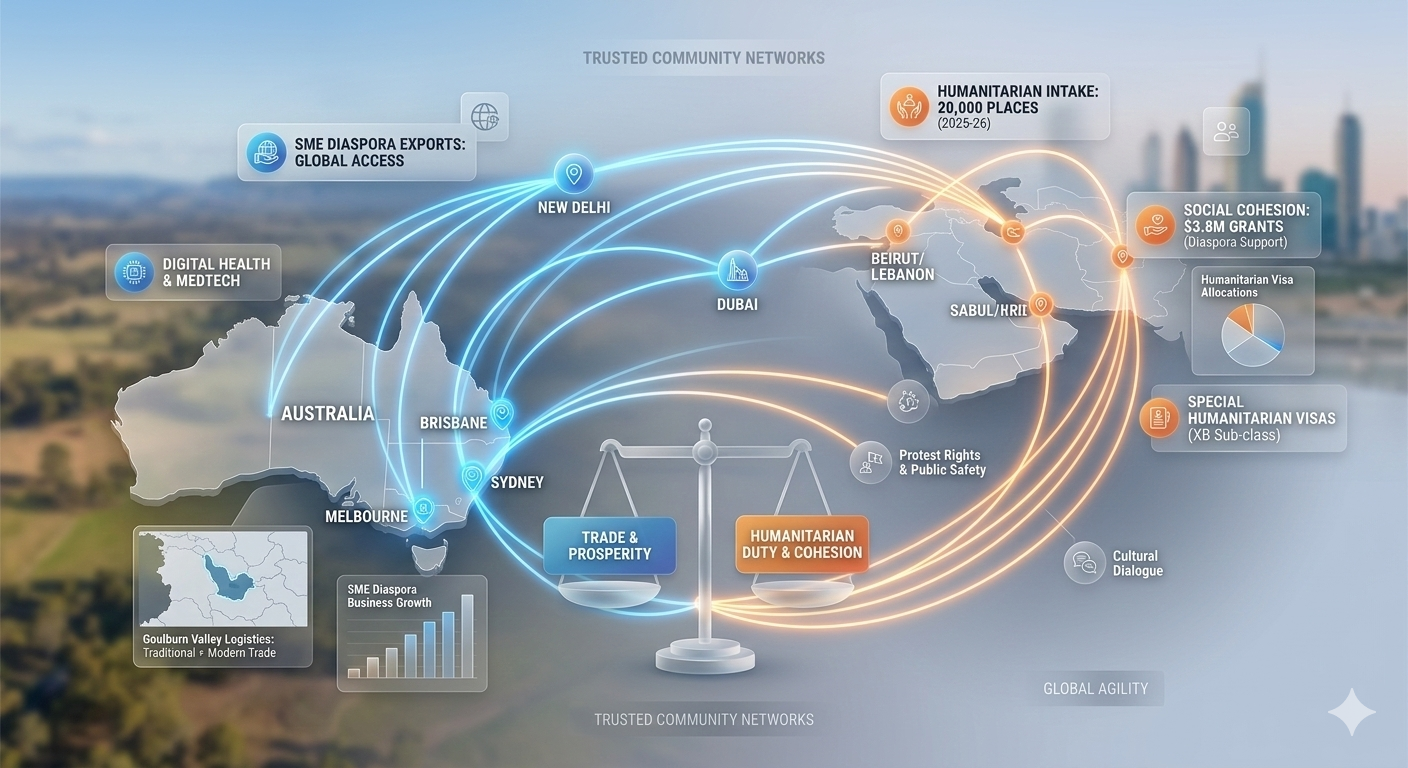
- Iran-Australia Ties: Over 30% of all Humanitarian visa applications globally are currently coming from people residing in Iran. With the Australian Embassy in Tehran temporarily suspending operations, hundreds of refugees granted “XB sub-class” visas are currently unable to facilitate their departure.
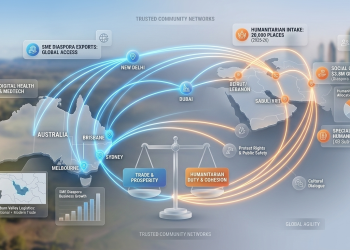
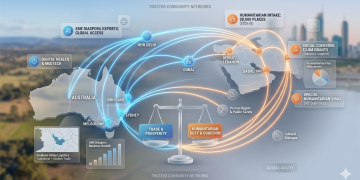
- The Intake Debate: While the government has committed to 20,000 places for the current year, the Law Institute of Victoria and other bodies are urging an increase to 27,000 places to meet the “escalating humanitarian demands” caused by this latest escalation.
- Letters of Assurance: The Department of Home Affairs is issuing “letters of assurance” to Afghan refugees in transit countries like Pakistan and Iran to help them navigate exit permits and prioritize their resettlement.
Community Cohesion: Protecting the ‘Australian Way of Life’
At home, the focus has shifted to maintaining safety and social harmony during a time of intense global grief.
- Social Cohesion Grants: The government has fast-tracked $3.8 million in funding to 41 multicultural organizations. This is specifically designed to support Palestinian, Muslim, and Arab communities in Australia who are navigating the emotional and social impacts of the conflict.
- The Protest Rights Balance: Following “Day of Action” rallies where tens of thousands of Australians marched in solidarity with the people of Iran, police and regulators are working to ensure protest rights are protected while maintaining “clear legal thresholds around intimidation.”
- The Office for Social Cohesion: A new federal office has been established to treat community resilience as “infrastructure,” prioritizing clear and fast communication to prevent the spread of misinformation within diaspora groups.
The Global-Local Link
In 2026, there is no such thing as a “distant” war. The ripples of the Middle East conflict are felt in the supermarkets of Lakemba, the community halls of Footscray, and the policy rooms of Canberra. Australia’s mission remains the same: to act as a safe harbor while navigating the complex diplomatic waters of a changing world.
Sources:
- Smartraveller: Global Travel Impacts and Middle East Security Updates
- Minister for Foreign Affairs: Australians should be prepared for travel disruptions
- Refugee Council of Australia: Supporting refugees and Australians in Iran
- The Guardian: ADF aircraft sent to assist Australians stranded in Middle East
- Department of Home Affairs: Social Cohesion and Multicultural Grants
Information correct as of March 2026 – Please visit smart traveller website for updated information