




























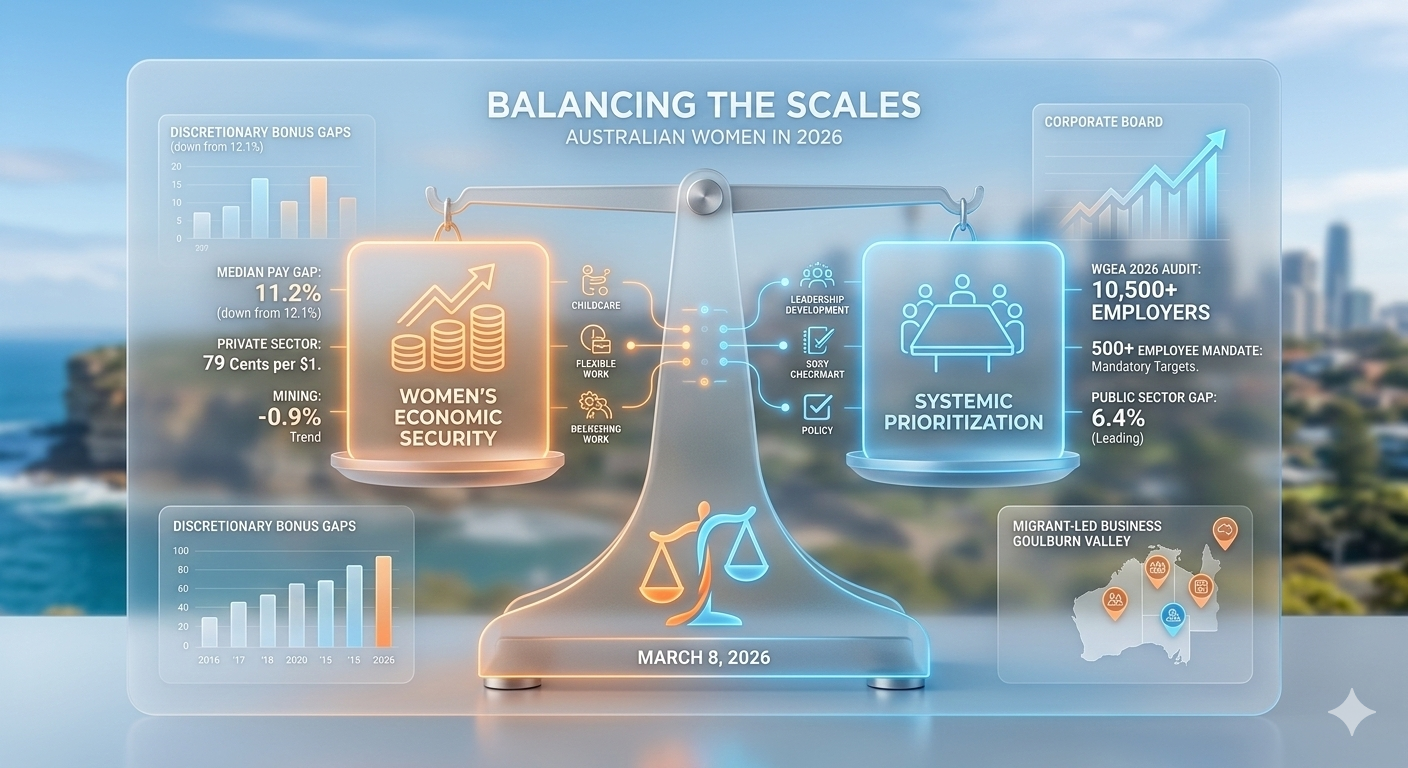
International Women’s Day 2026 (March 8) isn’t just about cupcakes and pledges. This week, the conversation has shifted from symbolic gestures to hard data. With the Workplace Gender Equality Agency (WGEA) releasing its massive 2026 report just days ago, Australian employers are facing a public “reality check” regarding what they pay their female workforce.

While the national trend is moving in the right direction, the numbers show that for many women, the “fair go” still comes with a significant price tag.
The Numbers: Closing the Gap, Slowly
The latest reporting from WGEA covers over 10,500 employers and roughly 5.9 million workers. The headline? We are seeing the lowest gender pay gaps on record, but the finish line is still decades away.
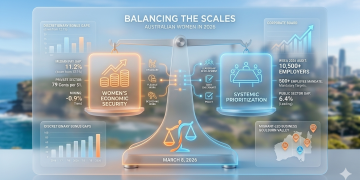
- The National Midpoint: The median total remuneration gender pay gap has fallen to 11.2%, down from 12.1% last year.
- The ‘Dollar’ Reality: For every $1 a man earns in the private sector, a woman earns 79 cents on average. Over a year, this gap widens to a staggering $28,356 difference in total remuneration.
- Target Range: Only 22.5% of employers currently sit within the “optimal” target range of +/- 5%.
High-Earners and ‘Shadow’ Gaps
One of the most revealing aspects of the 2026 data is the impact of discretionary pay—bonuses, overtime, and commissions.
While base salaries are beginning to align, the “discretionary gap” remains massive. WGEA reports that 50% of employers pay men at least 29.7% more in bonuses and additional payments than women. This is particularly prevalent in Financial Services and Mining, where men are 1.8 times more likely to be in the highest-earning pay quartile.
“Employers should treat gender equality like their other business goals,” says WGEA CEO Mary Wooldridge. “We need vigilance; the data tells a story of a systemic refusal to prioritize economic security.”
Industry Honor Roll (and the ‘Red’ Zone)
Not all sectors are created equal. The 2026 report highlights a sharp divide between women-dominated industries and traditionally “masculinized” sectors.
| Industry | Avg. Total Remuneration Gap (2026) | Trend |
| Construction | 23.8% | -1.5% (Improving) |
| Financial Services | 21.4% | -0.8% (Stagnant) |
| Mining | 18.9% | -0.9% (Improving) |
| Public Sector | 6.4% | Leading the way |
The ‘Women-Led’ Irony: Interestingly, some of the largest gaps appear in industries where women make up 90% or more of the workforce—such as retail and healthcare. This is often due to male CEOs and executives holding the top-tier salaries while the vast majority of female staff occupy lower-paid frontline roles.
New Rules: The 2026 Compliance Cliff
The days of “voluntary” improvement are ending. Under the Federal Government’s latest reforms, private sector employers with 500+ employees now face a strict new mandate:
- Mandatory Targets: Businesses must select and commit to achieving three specific gender equality targets.
- The Procurement Penalty: If an employer fails to demonstrate progress over the next three years without a “reasonable excuse,” they may become ineligible to supply goods or services to the government.
This “positive duty” is a game-changer for secure work, as it forces boards to move beyond reactive policies and toward measurable cultural change.
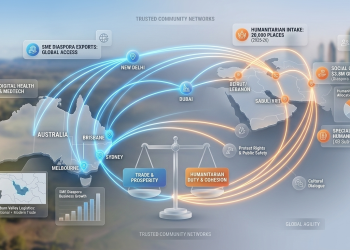
IWD 2026: ‘Balance the Scales’
The UN Women theme for 2026, “Balance the Scales,” is a direct call for justice—both in the courtroom and the cubicle. In the Goulburn Valley and other regional hubs, migrant-led businesses are showing the way, often reporting narrower gaps than their metropolitan corporate counterparts.
As we celebrate today, the message for 2026 is clear: Transparency is the new floor, not the ceiling.
Sources: