





















The era of “guilt-free” shopping is hitting a massive speed bump. For years, we’ve been told that buying the shirt made of “ocean plastic” or the bank account that’s “carbon neutral” was our ticket to saving the planet. But as we move deeper into 2026, Australian consumers are swapping their enthusiasm for a healthy dose of skepticism.

We’ve reached a tipping point where “ethical” has become a buzzword so diluted it almost means nothing. According to recent brand transparency benchmarks, while over half of us still want to buy sustainable products, we no longer take a brand’s word for it. In fact, if a company can’t show us the data, we’re increasingly likely to swipe left.
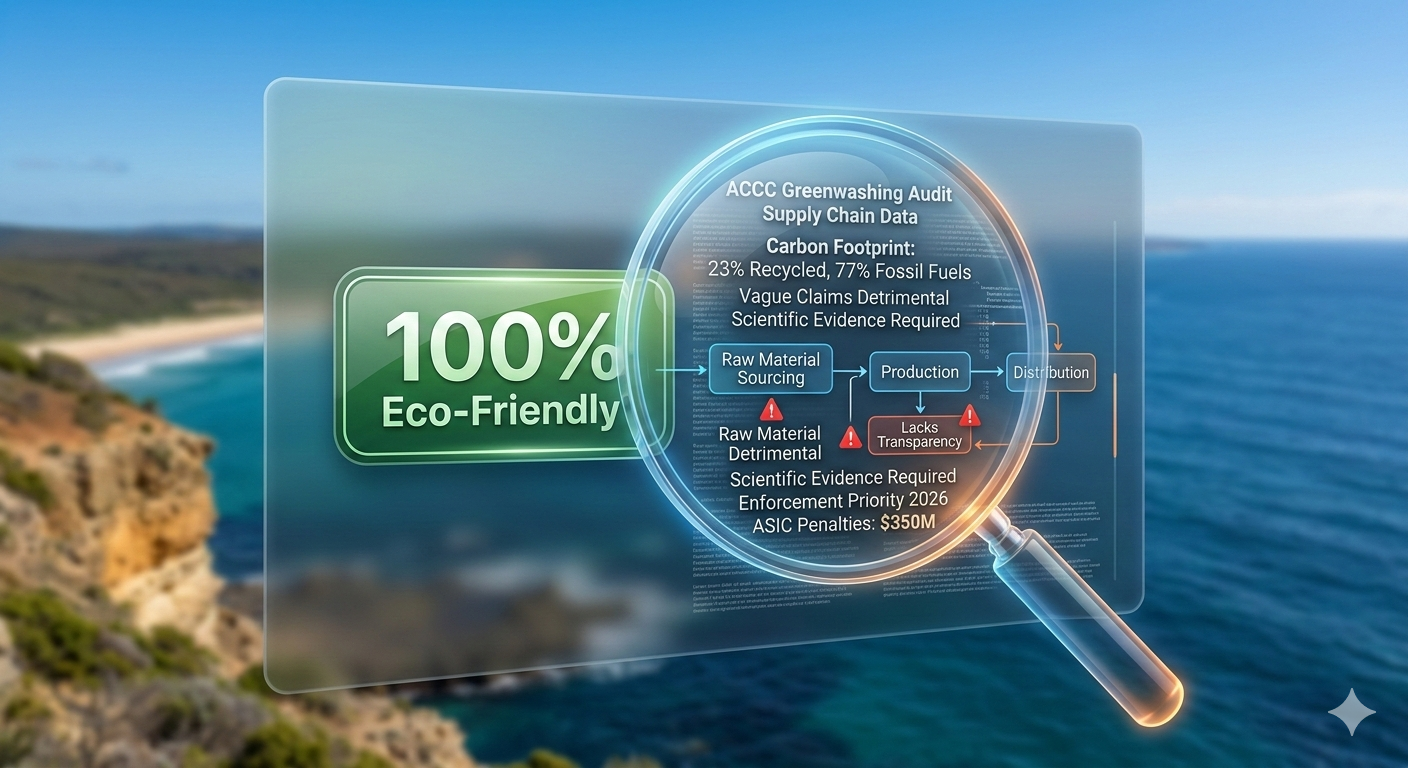
This isn’t just a vibe shift; it’s a legal one. The Australian Competition and Consumer Commission (ACCC) has officially made environmental and sustainability claims a top enforcement priority for 2026. They aren’t just looking for outright lies; they’re hunting for “vague” claims that mislead the everyday shopper.
The ACCC is Entering the Chat
The days of slapping a green leaf on a plastic bottle and calling it “eco-friendly” are effectively over. The ACCC’s 2026 guidance is crystal clear: if you make a claim, you better have the scientific evidence to back it up on your website, not tucked away in a 40-page PDF no one reads.
The regulator is currently conducting “internet sweeps” to identify businesses that use broad, unqualified terms like “renewable” or “clean” without context. For example, if a clothing brand says a shirt is “made from recycled materials,” but only 5% of the thread is actually recycled, they could be facing massive fines for misleading conduct.
It’s a move designed to protect the “fair dinkum” businesses — the ones actually doing the hard work of decarbonizing their supply chains — from being drowned out by competitors who are simply better at Photoshop.
ASIC is Following the Money
It’s not just the stuff in our shopping carts under the microscope. Our superannuation and bank accounts are getting a forensic audit, too. The Australian Securities and Investments Commission (ASIC) has been busy hitting major financial institutions with record penalties for greenwashing.
In the second half of 2025 alone, ASIC secured over $350 million in civil penalties. A huge chunk of that focus is on “sustainable” investment funds that aren’t as green as their brochures suggest. For young Australians trying to grow their wealth without funding fossil fuels, this oversight is a game-changer.
ASIC Chair Joe Longo has been vocal: “Substance over form” is the new rule of law. It doesn’t matter how thick your “Ethical Standards” manual is if your traders are ignoring it in the heat of a deal.
Multicultural Australia: The New Ethics Driver
What’s often missed in the “ethical business” conversation is how Australia’s multicultural identity is shaping the demand for real impact. We aren’t a monolith, and our expectations for “social impact” often include how companies treat their global workforce and diverse local communities.
For many First Nations consumers and Australians from migrant backgrounds, “social impact” isn’t an abstract marketing goal — it’s about tangible respect and representation. A brand claiming to be “inclusive” while lacking diversity in its leadership or failing to honor Indigenous land rights is facing a unique brand of “social-washing” backlash.
In 2026, authenticity means moving beyond a “Harmony Day” post. It means showing how a business supports multicultural supply chains and ensures that their “ethical” products aren’t being made through the exploitation of overseas workers in the global south.
The “Receipts” Era: What Actually Counts as Impact?
So, how do you tell the difference between a brand that cares and a brand that’s just capping? In 2026, “Real Impact” has three distinct features:
- Granular Transparency: They don’t just say “carbon neutral”; they show you the specific projects they funded to get there and why those projects actually work.
- Third-Party Verification: They aren’t grading their own homework. Look for B-Corp certifications, Climate Active stamps, or independent audits that haven’t been paid for by the brand’s own PR firm.
- Acknowledge the Messy Parts: No business is 100% perfect. The brands gaining the most trust in 2026 are the ones being honest about their “transition” — admitting where they’re failing and showing the roadmap to fix it.
Why Scepticism is Actually a Superpower
While it might feel exhausting to have to fact-check every “organic” label, this era of skepticism is actually a good thing for the Australian economy. It’s forcing a “survival of the trendiest” to turn into a “survival of the truest.”
When we stop rewarding “vibes” and start demanding “values,” we create a market where actual innovation thrives. We move away from “fast-ethics” — which is just as disposable as fast fashion — and toward a sustainable business model that actually protects the Country we call home.
The 2026 trust test is a high bar, but it’s one that every Australian business needs to clear if they want to stay relevant to a generation that has seen enough filters to recognize the truth when they see it.
Source: ACCC Enforcement Priorities 2026, ASIC Media Releases, Monash Lens Sustainability Reports.