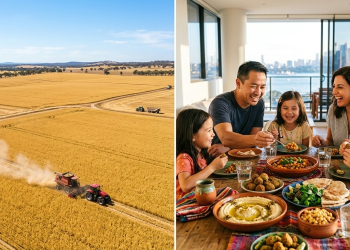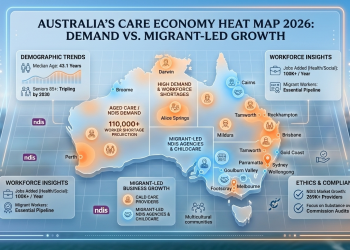

































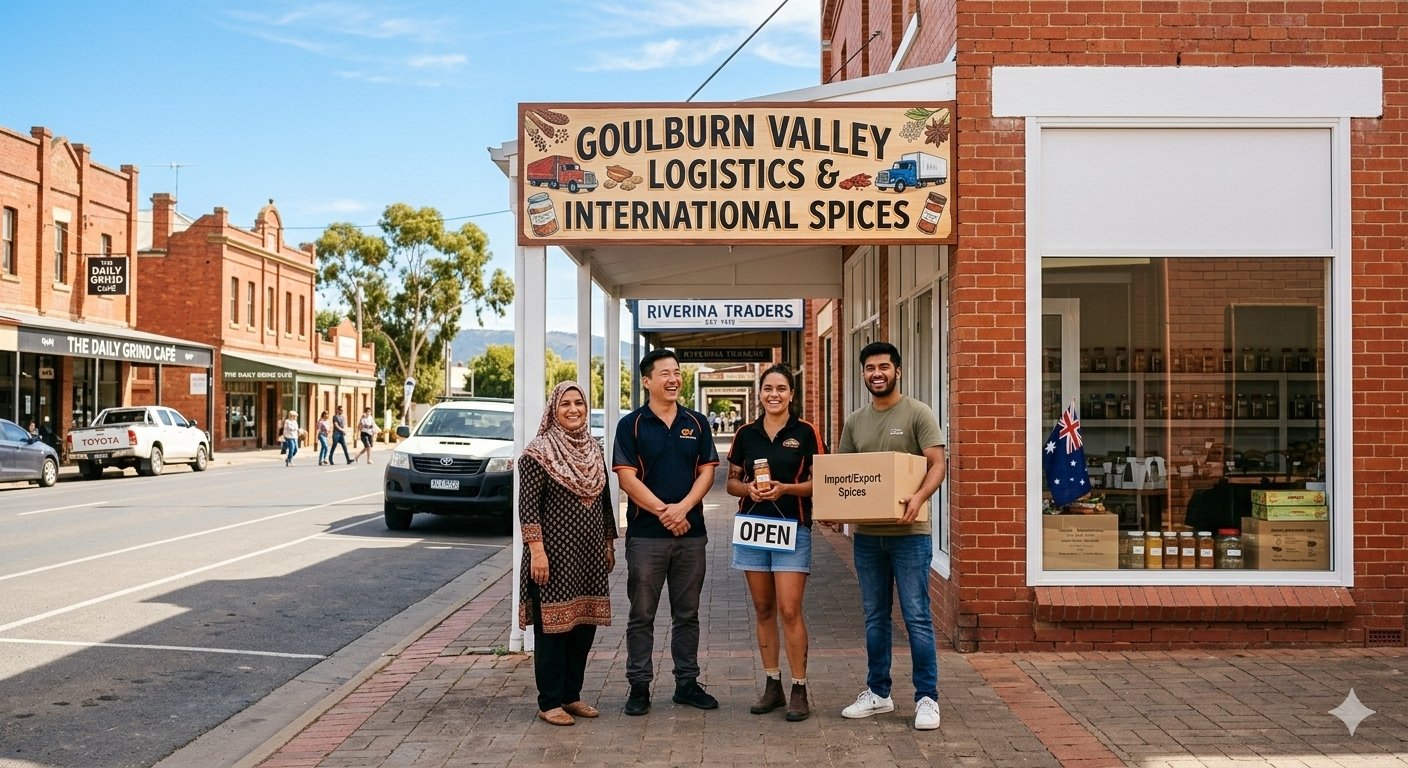
The Great Australian Dream is getting a regional makeover. For decades, the narrative of migration in Australia was anchored firmly to the concrete jungles of Sydney and Melbourne. But in 2026, a quiet revolution is happening “beyond the bypass.” From the fruit-laden valleys of the Goulburn to the red dust of the Pilbara, regional Australia is becoming the nation’s most vibrant business frontier.

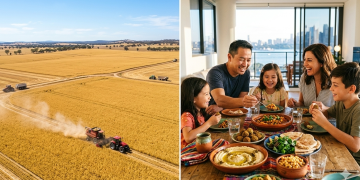
It isn’t just about a tree change; it’s a strategic pivot. Driven by a combination of housing affordability, specific regional visa pathways, and a desperate need for skilled trades, thousands of migrant families are setting up shop in towns that were once struggling to keep their post offices open. Today, those same towns are home to booming logistics firms, high-tech agricultural startups, and a culinary scene that reflects the true diversity of modern Australia.
The Numbers: More Than Just a Trend
The data tells a compelling story. According to the Regional Australia Institute (RAI), net migration from capital cities to regional areas remains nearly 36% higher than pre-pandemic levels as of early 2026. While many “city-slickers” are moving for lifestyle, it’s the overseas-born arrivals who are increasingly filling the economic gaps.
The Australian Bureau of Statistics (ABS) confirms that while Sydney and Melbourne saw a net loss of tens of thousands of residents to internal migration last year, regional hubs in Queensland and Western Australia saw record-breaking gains.
This isn’t just population growth—it’s economic fuel. In towns like Wodonga, Tamworth, and Mildura, local council business registers are seeing a spike in new ABN registrations. These aren’t just “side hustles”; they are essential services. We’re talking about diesel mechanics in the Hunter Valley, irrigation specialists in the Riverina, and logistics operators in the Top End.
The Visa Hook: Subclass 491 and the “Regional First” Shift
The federal government’s 2025–26 Migration Program has leaned heavily into this regional tilt. With 33,000 places specifically allocated to regional visas (like the Subclass 491), the path to permanent residency now literally runs through the bush.
State governments are acting as the ultimate matchmakers. In New South Wales, the government has been prioritising “Pathway 1” applicants—those already working for regional employers. Meanwhile, Migration Queensland has been actively courting small business owners who are willing to invest in regional postcodes.
For a young migrant family, the math is simple: Why struggle with a $1.5 million mortgage in a Sydney suburb for a 2-hour commute when you can buy a family home in a regional city for a third of the price and be the only specialist electrician in a 100km radius?
Multiculturalism in the Main Street
Walk down the main street of a town like Orange or Shepparton in 2026, and you’ll see the “Australian Canvas” in full colour. The “regional frontier” is being defined by its multicultural flavor.
It’s not just about diversity for diversity’s sake; it’s about survival. Regional towns have long faced an aging population and a “brain drain” of young people heading to the cities. The arrival of migrant entrepreneurs has acted like a shot of adrenaline.
- Agri-Tech Pioneers: New arrivals with backgrounds in engineering are applying global tech to local farms, optimizing water usage in the Murray-Darling.
- The Food Revolution: The “local pub” is now frequently flanked by authentic Nepalese, Punjabi, or Vietnamese eateries, turning regional towns into weekend “foodie” destinations.
- Trade Titans: From panel beaters in Dubbo to stonemasons in Tasmania, the skilled migration stream is literally rebuilding regional infrastructure.
The Housing Pressure Valve
We can’t talk about the regional move without talking about the “H” word: Housing. While regional areas aren’t immune to the national housing crisis, they often offer a level of stability that the capitals can’t match.
The Regional Development Australia (RDA) network has highlighted that while housing supply is tight, the “social impact” of migrant business owners is helping to drive new developments. In some cases, migrant-led construction firms are the ones actually building the new estates that the town needs to grow.
By moving outward, these families are acting as a pressure valve for our overcrowded capitals, proving that “breaking news” in 2026 isn’t just happening in Parliament House—it’s happening in the local bakeries and workshops of our regional heartland.
The New “Fair Go”
The “quiet” part of this frontier is over. Regional Australia is no longer a “backup plan”; it is a first-choice destination for those looking to build a legacy. It’s a place where the Australian value of a “fair go” meets global ambition.
For the young Australian reader, the takeaway is clear: the future of the nation’s economy isn’t just in the CBD high-rises. It’s in the hands of the people who saw a “Skills Shortage” sign in a regional window and decided to stay and open a business.
Source: Regional Australia Institute (RAI) March 2026 Update; ABS Regional Population Estimates; Australian Department of Home Affairs 2025-26 Migration Program Planning.